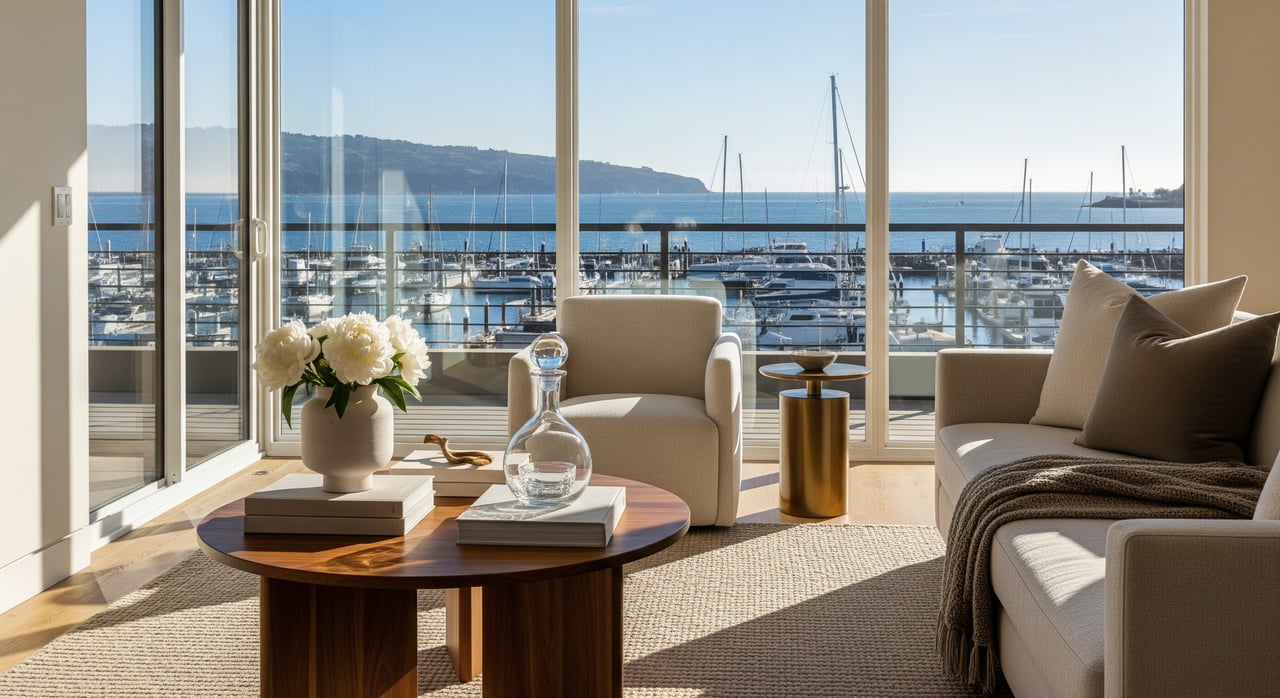
Thinking about listing your condo in Marina? Buyers in 94123 want spaces that feel light, easy to live in, and ready on day one. If you show them a clean, smart layout with storage for coastal gear and a balcony that doubles as a living room, you will stand out fast. In this guide, you will learn condo‑specific staging moves that fit Marina lifestyles, a simple prep timeline, cost ranges, and how a Concierge‑style program can fund improvements. Let’s dive in.
Why staging matters in 94123
Marina sits on Monterey Bay, close to beaches, trails, and the Monterey Peninsula. Many buyers here want a turnkey condo that supports an active lifestyle with bikes, paddleboards, and easy weekend routines. They value low‑maintenance living and quick access to outdoor recreation.
That is why staging for light, space, and storage pays off. You want buyers to see clean lines, flexible layouts, and clearly defined zones for gear. A livable balcony or patio can tip the balance. Parking and Homeowners Association (HOA) rules also factor into decisions, so plan to showcase these details in your marketing.
Local market conditions shift, so confirm pricing and timing with current MLS data and a local agent. Your goal is to remove friction for buyers who are comparing similar condos and need help imagining daily life in a smaller footprint.
Stage for light and space
Light and perceived space are the first impressions that sell.
- Open and service window treatments. Make sure blinds glide. Clean sliding door glass and tracks so daylight pours in.
- Use warm, daylight‑balanced bulbs around 3000 to 4000K. This keeps finishes natural without a yellow cast. Add floor and table lamps in rooms with fewer windows.
- Replace dim or mismatched fixtures with simple, modern options. Lighting swaps offer fast visual impact for a modest cost.
- Add mirrors near windows or the balcony to reflect sky and water. A well‑placed mirror extends a view and makes the room feel larger.
- Paint in light, neutral tones. Soft greiges and coastal neutrals expand perceived space. If you use an accent wall, keep it subtle and tie it to a view or an architectural focal point.
Layout that fits small footprints
Show buyers how the space works without crowding.
- Create clear circulation from the entry to the balcony. Remove extra chairs and oversized pieces. Keep walkways open.
- Right‑size your seating. A compact sofa and two chairs can show everyday comfort for two to four people without blocking doors.
- Use multi‑purpose furniture. Try nesting tables, a narrow console behind the sofa, and storage ottomans. These pieces add function without bulk.
- Show a small work zone. A tidy desk by a window or a floating shelf can suggest a home office without turning the whole room into one.
- Visual declutter. Pack up collections and family photos. Keep a few neutral decor pieces to suggest lifestyle, not personalization.
Make storage a selling point
Storage and organization are high‑value features for Marina buyers.
- Showcase closet capacity. Clear out two‑thirds of items, fold neatly, and use matching hangers. Stage labeled boxes under beds or in hall closets to signal order.
- Stage gear storage. A compact, tidy rack or hooks for bikes or wetsuits can sell the coastal lifestyle in a snap. If HOA rules restrict storage in hallways, highlight assigned storage lockers or garage space in your listing photos and captions.
- Simplify kitchen and bath surfaces. Keep counters clear except for one or two quality items, like a tray, vase, or coffee station. Use drawer organizers and neat pantry shelving to reinforce a move‑in ready message.
Sell the coastal lifestyle
Help buyers picture morning coffee with ocean air and easy weekend routines.
- Dress the balcony. A bistro set, marine‑grade cushions, and a potted plant can turn a small balcony into a bonus room. This is a high‑ROI move for coastal condos.
- Keep coastal touches neutral. Think sea‑glass colors, linen textures, and woven baskets. Avoid heavy themes or novelty decor.
- Polish the entry. If your unit opens to an interior corridor, stage a foyer moment with a console, mirror, and greenery. If it opens to an outdoor path, sweep the approach and refresh door hardware.
- Elevate kitchens and baths. Update cabinet hardware and faucets if budget allows. Use hotel‑style towels and a simple tray. Remove all personal toiletries.
Materials that last by the coast
Marina’s salt air and humidity call for smart materials and maintenance.
- Choose resilient finishes. Stainless steel, marine‑grade fasteners, teak or synthetic teak for balcony furniture, and performance fabrics help resist corrosion, mold, and fading.
- Control humidity. Replace HVAC filters, clean vents, and confirm kitchen and bath exhaust fans work well.
- Neutralize odors. Address pet and smoke smells before you list. Professional carpet cleaning can help. If dampness lingers, consider a discreet dehumidifier in closets or bathrooms before photos.
Costs, ROI, and how to fund it
Every condo is unique, but some categories tend to deliver strong value.
- Low cost, high impact. Decluttering, cleaning, paint touchups in neutral colors, bulb upgrades, deep cleaning windows and doors, and staging the living room, primary bedroom, and balcony. Expect costs from a few hundred to a few thousand dollars based on size and labor.
- Mid cost, strong impact. Professional staging or furniture rentals, minor kitchen and bath hardware updates, new light fixtures, balcony upgrades, and professional photos. Larger condos or full‑service staging typically require multiple thousands.
- Higher cost, selective impact. Built‑ins, flooring replacement, or a kitchen refinish. Save these for properties where condition, competition, or pricing justify the investment.
Industry surveys and realtor reports regularly indicate that staging helps homes sell faster and makes it easier for buyers to visualize living in the space. Exact returns vary by market, list price, and the quality of the work. For condos in Marina, the best returns usually come from high‑impact, lower‑cost moves like paint, lighting, and focused decluttering.
Using a Concierge‑style program
Many brokerages offer programs similar to Compass Concierge that advance funds for pre‑sale improvements. These programs typically cover staging, painting, small repairs, landscaping, decluttering, and professional photos. You repay from closing proceeds. Terms vary, so confirm eligible services, funding limits, any fees, vendor requirements, and approval steps with your agent. Ask for a written scope and budget before work begins and confirm local availability for condo and HOA projects in Monterey County.
A simple pre‑listing timeline
Use this quick plan to keep your project on track.
Three to four weeks before photos
- Deep clean the unit, including windows, tracks, and blinds.
- Declutter 30 to 50 percent of visible items. Depersonalize rooms.
- Touch up paint in neutral tones. Patch and roll where needed.
- Replace bulbs and swap mismatched fixtures.
- Refresh the balcony. Clean surfaces and add seating and plants.
- Reorganize storage. Edit closets, label boxes, and photograph storage lockers or garage space if available.
- Fix small repairs like cabinet hinges, door handles, sliding door rollers, and leaky faucets.
- Check with your HOA for any rules affecting common areas, signage, or balcony furnishings.
Final week
- Bring in rented furnishings or accessories if using professional staging.
- Sweep entries, replace the doormat, and polish hardware.
- Schedule professional photos in daylight. Capture balcony views and storage areas.
- Prepare marketing notes that highlight storage, proximity to beaches and trails, parking, and HOA amenities.
Day of showings
- Open blinds, turn on all lights, and clear counters.
- Remove personal items and valuables.
- Use a fresh, neutral scent. Avoid strong fragrances.
HOA, safety, and photos
Condo staging touches common property, so do a quick compliance check.
- Review HOA CC&Rs and rules for balcony use, exterior changes, signage, and any staging in shared spaces like rooftops or lobbies.
- If you plan to stage or store items in common areas, get HOA permission and confirm liability coverage for vendors.
- Hire a professional photographer. For smaller units, a careful wide‑angle approach helps show space without distortion. Virtual staging can be useful for vacant condos, but disclose it in marketing per MLS rules and provide actual photos of key spaces.
Ready to list with confidence
When you stage around light, layout, storage, and lifestyle, you help Marina buyers see an easy, turnkey life by the coast. Focus on neutral finishes, durable materials, and a balcony that lives like an extra room. Use a clear prep plan and, if helpful, fund improvements through a Concierge‑style program so your condo hits the market at its best.
If you want hands‑on guidance and a streamlined plan from prep to photography and launch, connect with Casey L Cowell to get started.
FAQs
What staging updates offer the best ROI for a 94123 condo?
- Focus on decluttering, neutral paint touchups, lighting upgrades, deep cleaning, and staging the living area, primary bedroom, and balcony for the strongest value.
How should I stage a small balcony in the Marina?
- Add a compact bistro set, marine‑grade cushions, and a potted plant to create an outdoor living zone without crowding the space.
What lighting color temperature works best for Marina condos?
- Use warm, daylight‑balanced bulbs in the 3000 to 4000K range to render finishes naturally and keep rooms bright.
How do I show storage for coastal gear without violating HOA rules?
- Stage tidy in‑unit solutions like hooks or a compact rack and highlight assigned storage lockers or garage space in photos and captions if hallway storage is restricted.
Should I invest in new flooring or a kitchen refinish before selling?
- Consider higher‑cost projects only if your condo’s condition and competition justify them; many sellers see better returns from lower‑cost updates.
What are common HOA considerations when staging a condo?
- Check CC&Rs for balcony furniture rules, exterior changes, and use of common areas; secure permission and verify vendor insurance before staging shared spaces.
Can I use a Concierge‑style program to pay for staging and paint?
- Yes, many programs advance funds for staging, painting, small repairs, and photos, with repayment from closing proceeds; confirm terms and eligible services with your agent.
