For most of the past seven years, the corner of Geary Boulevard and Parker Avenue has been a fenced-off scar. A construction crew ruptured a marked PG&E gas line there in February 2019 while working near the old Hong Kong Lounge II, and the fire that followed gutted the building. It has sat that way since, a blackened storefront two blocks from some of the most stable single-family real estate in San Francisco.
That corner is finally moving, and the way it's moving tells you more about Jordan Park than any median price chart. A new proposal for the site, an eight-story building with 89 for-sale condos, could clear San Francisco's approval process in as little as six months. Two blocks away, on the same boulevard, a nearly identical kind of project took six years to get through City Hall. The gap between those two timelines is not a fluke. It's the clearest evidence yet that Jordan Park's reputation as a slow, unchanging enclave only applies to half the neighborhood now.
The Corner That Took Six Years
The earlier case is the Coronet, a movie palace on Geary that once ran Star Wars for 29 straight weeks to lines long enough to reach the block behind it. The Goldman Institute on Aging bought the property in 2000 for $8.5 million with plans to replace it with senior housing. The environmental review alone took nearly two years after the Planning Commission certified the study in 2006. The Board of Supervisors rejected an appeal of that certification by a 9-1 vote that same year, but the project still faced a legal challenge and organized opposition from Jordan Park neighbors over traffic, parking, shadows, and blocked views. Some pushed to have the theater landmarked outright. The delays ran up costs for years before the Coronet finally closed in 2005, came down in 2007, and reopened as a senior housing campus in 2011.
Every one of those friction points, the mandatory hearings, the environmental appeal, the ability of neighbors to organize a landmark push, existed because the city's old review process gave objectors real leverage over commercial-corridor projects. That leverage is largely gone now.
What the Zoning Reset Actually Removed
San Francisco's Family Zoning Plan was signed into law in December 2025 and took effect in January 2026. It eased height and density limits across parts of the city with the stated goal of creating room for an estimated 36,000 new housing units. For a project like the one now proposed at Geary and Parker, the practical effects are specific:
- Community meetings, once a required step that gave neighbors an early venue to organize against a project, are no longer mandatory for many applications.
- The affordable housing set-aside for this project dropped from 15 percent to 5 percent, lowering the cost of qualifying for density bonuses.
- Once an application is deemed complete, the Planning Department now has a six-month clock to act, replacing what used to be an open-ended timeline.
The site's own history shows how much that changes the math. The project's client cycled through the parcel with two earlier proposals before landing on the current one. The first called for 41 units. The second grew to 62. The current filing sits at 89 units, 13 of them deed-restricted as affordable, with 1,400 square feet of ground-floor retail and 53 parking spaces built into stackers.
That is not a project getting more ambitious for its own sake. It's a project getting bigger because the rules changed underneath it while it sat on the drawing board.
Why Your Street Might Not Feel Any of This
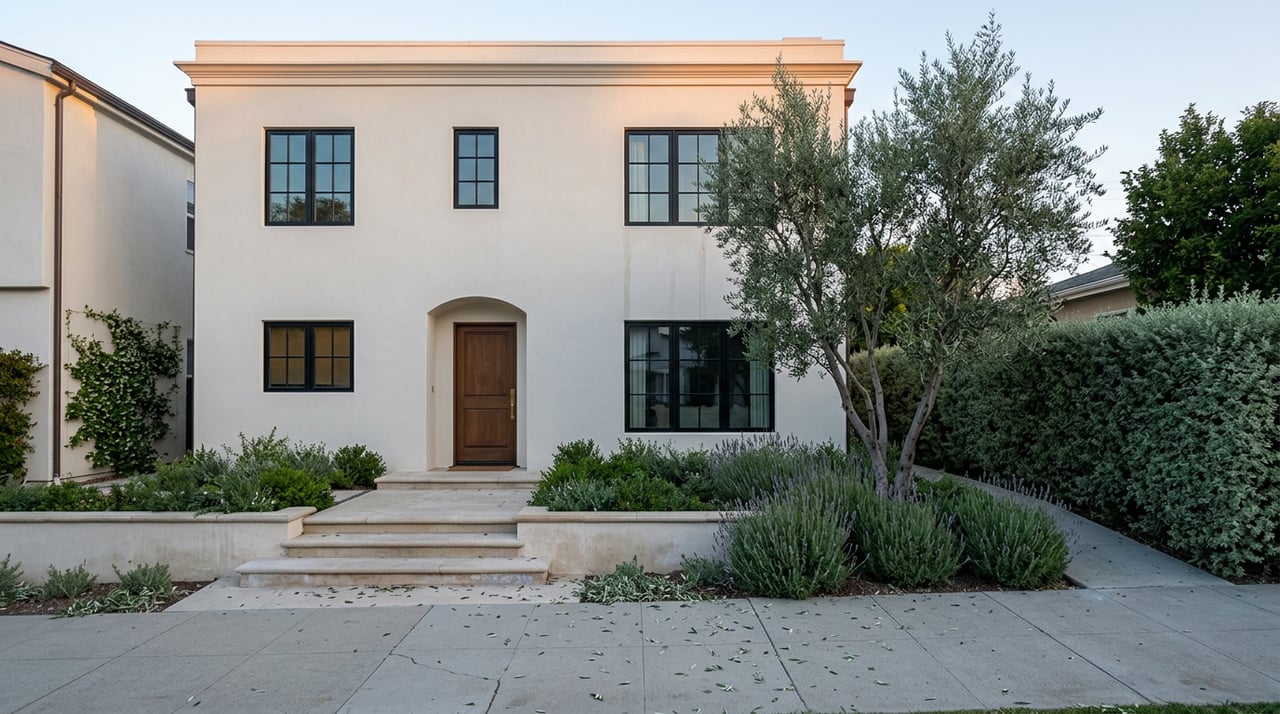
Here is the part the zoning reset doesn't touch. Jordan Park's residential core was platted as a planned tract in the early 1900s, and most of its homes were built between 1905 and 1925 during the city's post-earthquake rebuilding. They are Edwardian flats and single-family houses with formal facades, period millwork, and lot sizes generous enough that a standalone house with side yards is still a realistic purchase there, something increasingly rare elsewhere in San Francisco. Owners tend to stay for 10, 20, sometimes 30 years before a property changes hands.
The density tools built into the Family Zoning Plan work by letting a developer stack more units onto a parcel that's already large enough to support an 8-story building, usually a commercial strip with a single owner and a building ready for teardown. Jordan Park's interior streets don't offer that kind of parcel. There's no equivalent lever for a block of narrow, individually owned single-family lots. The mechanism that just cut years off approval timelines on Geary has nothing to grab onto once you turn off the boulevard and into the tract itself.
The Corridor Isn't a One-Off
The Geary Boulevard proposal is one of six housing projects now moving through the pipeline along the corridor, together totaling roughly 300 units. A few blocks out, developer Sean Sullivan is planning a 49-unit, six-story condo building on the former Firestone Tires site at 2800 Geary, invoking the same Housing Choice San Francisco program. Further out in the Richmond District, Kieran Woods Construction has proposed an 8-story, 42-unit building next to the vacant, historic Alexandria Theater, more than double what the site could have supported under the old rules.
None of that pipeline runs through Jordan Park's interior. All of it runs along Geary.
What It Means If You're Comparing Neighborhoods This Fall
If you're weighing Jordan Park against other Richmond-adjacent or Laurel Heights enclaves, the honest read is that you're looking at two markets wearing one name. The interior tract, the Edwardian single-family stock that most buyers picture when they hear "Jordan Park," has stayed remarkably steady through years of a boarded-up corner two blocks away. Recent sales activity over the trailing twelve months through mid-2026 put the neighborhood's median well above two million dollars, up from the prior year, with homes moving off the market in under a month on average, well ahead of typical national pacing. None of that momentum depends on what happens at Geary and Parker.
The edge along Geary is a different story, and a longer one. Once a permit clears later this year or into 2027, expect an active job site there for a stretch measured in years, not months, given the scale of an 8-story excavation and structural build. If you're touring homes near that corridor, factor in a genuine construction runway rather than a quick in-and-out project. What you're likely to get on the other side is new ground-floor retail and restaurant space on a stretch that's needed it for years, not a flood of new inventory that competes with the single-family homes a few streets over.
A Few Questions Worth Asking Before You Tour
Will the new construction on Geary hurt home values in Jordan Park's core? There's little reason to expect it. The new units are for-sale condos on a commercial strip, a different product entirely from the Edwardian single-family stock that defines the interior tract, and the projects add no comparable inventory to what sellers there compete against.
How long will construction disruption near Geary actually last? No firm timeline exists yet since the site permit hasn't cleared, but given the scale of the approved design, expect an extended active work site once it does, not a short-term inconvenience.
Does the faster approval process mean more of this is coming? Almost certainly. Six projects are already moving through the Geary pipeline, and the city's own estimate puts capacity for roughly 36,000 new units citywide under the same rules that unstuck this one.
If you're trying to figure out what a home in Jordan Park actually buys you this year, versus what the boulevard two blocks away is about to become, that's exactly the kind of read a local agent should walk through with you property by property. Casey L Cowell offers a complimentary consultation for buyers and sellers working through San Francisco's northside neighborhoods, and can help you separate the parts of Jordan Park that are changing fast from the parts that aren't changing at all.
